
WHY BRITAIN NEEDS CYBER APPRENTICESHIPS NOW
And why business must lead the way
Rob Elsey | Chief Digital & Information OfficerWhen Co-op faced its own cyber incident last year, one thing became clear very quickly. Technology is vital, but people are what really make the difference. It was the judgement, commitment and resilience of colleagues across the business that helped us keep serving our communities. Cyber security is not just a technical challenge. At its heart, it is a human one.
Cyber attacks on UK businesses are no longer rare or shocking events. They are part of everyday life. Government figures show that 43 per cent of UK businesses suffered a cyber breach or attack in the past year, affecting more than 600,000 organisations.
When Co-op faced its own cyber incident last year, one thing became clear very quickly. Technology is vital, but people are what really make the difference. It was the judgement, commitment and resilience of colleagues across the business that helped us keep serving our communities. Cyber security is not just a technical challenge. At its heart, it is a human one.
Yet just as cyber threats are growing, Britain is falling behind on cyber skills. Nearly half of UK businesses say they have basic cyber skills gaps, and almost a third lack the advanced skills needed to respond to serious attacks. That puts jobs, services and economic confidence at risk.
If we want a stronger, safer Britain, we need to fix the skills pipeline – and apprenticeships are one of the most effective ways to do it.
Cyber apprenticeships: not just for school leavers
There is still a belief that apprenticeships are only for young people leaving school. That simply is not true. Cyber apprenticeships offer routes for people of all ages – whether starting out, retraining, returning to work or looking for a new technical career. Programmes now run from entry level right through to degree level.
At Co-op, cyber apprentices are given real responsibility from day one. They work alongside experienced teams, helping to spot threats, understand vulnerabilities and support incident response. This hands-on experience builds confidence and practical skills far faster than classroom learning alone. Many go on to permanent roles helping to protect our systems and our members.
Learning on the job, without the debt
Apprenticeships combine structured learning with real-world experience. Apprentices earn while they learn, apply new skills immediately and build professional networks early in their careers – all without taking on university debt. For many people, this makes a career in cyber not just appealing, but possible.
Programmes such as The Hacking Games also play an important role by helping young people test and develop their technical skills in a safe and ethical way, opening doors to positive careers in cyber security.
Government and education providers have a part to play, but they cannot solve this alone. Every organisation now relies on digital systems. That means every organisation has a responsibility to help train the people who will protect them.
Businesses need to create more apprenticeships, open up accessible entry routes, support retraining and work more closely with educators so training matches real-world needs. Just as importantly, they must offer clear career progression so cyber talent is developed and retained.
Cyber security is now part of the fabric of Britain’s economy. Our strongest defence is a skilled, confident, home-grown workforce, backed by employers who understand what is at stake.
As we mark National Apprenticeship Week, the message is simple. If we want Britain’s businesses, jobs and communities to be safe, we must invest in the people who defend them. Cyber apprenticeships are not optional. They are essential.
Related content
-

Explore Logistics Careers at Co-op
Join Co-op logistics teams and help keep stores stocked with the products customers love. We offer roles for warehouse operatives, drivers, managers, and specialists. -
Discover Careers at Co-op
At Co-op, we do things differently. Join a company owned by its members, focused on giving back to communities, and offering work that truly matters. -
Early Careers at Co-op
Kickstart your career with Co-op’s early careers opportunities. Gain valuable skills, experience, and make a real difference in communities across the UK. -
Your Co-op Application Journey
Learn how Co-op ensures a fair, simple, and supportive application process for all candidates, with constructive feedback and equity at its heart. -
Diversity and inclusion at Co-op
At Co-op, we celebrate individuality and embrace diversity. Join an inclusive environment where your talents and beliefs are respected and valued. -
-
Seeing what's possible: Cherosa's story
Cherosa Phiri tells us about her time as an intern in Co-op's Property team -
Introducing Co-op's inclusion passport
Store Manager Lisa Deason explains how Co-op's inclusion passport is helping her get the support she needs to thrive at work. -
Inclusion & Diversity Policy
We know that simply having a diverse workforce is not enough. We want to create an inclusive environment, where everyone can contribute their best work and develop to their full potential. -
Mental health policy
Here at the Co-op we want to support our colleagues’ wellbeing, and this includes their mental health. -
Trans and Non-Binary Inclusion Policy
Here at the Co-op we want all our colleagues to feel included, so that everyone can add value and fulfil their potential without fear of discrimination. -
Interview and workplace adjustments guide
Here at Co-op we want to make sure disabled and neurodivergent colleagues are treated fairly and have access to the same opportunities as everyone else. -
Supporting people with disabilities into work
At the Co-op we’re committed to supporting our communities. We can do this is by helping people with disabilities into work. -
Retail Seasonal Jobs
Join us as a Customer Assistant and have a summer job to remember. -
Why choose a Co-op career?
Be part of a one-of-a-kind organisation. Make a positive impact, enjoy flexible working, and grow your career. -
Introducing Co-op Insurance – Innovative Careers in Manchester
Join Co-op Insurance to protect what matters. Develop cutting-edge products and services for motor, home, pet, and travel insurance at our Manchester head office. -
Drive Your Future with Co-op LGV Careers
Join Co-op as an LGV driver and deliver great products to millions across the UK. No retail industry experience required—just bring your passion to the driver’s seat. -
Co-op Legal Services
Join Co-op Legal Services to make a difference. Explore career opportunities for both qualified and non-qualified professionals across our UK offices. -
Member Activators | Connecting with our communities
Meet Co-op’s Member Activators, a dedicated network across the UK raising awareness of membership and collaborating to address key community issues. Discover their impact today. -
Warehouse Operatives
Flexible Co-op warehouse roles for experienced and non-experienced professionals. Grow your career while feeling safe, respected, and supported. -
Undergraduate Placement Opportunities
Kickstart your career during university with Co-op undergraduate placements. Explore diverse roles in Digital Technology, Commercial teams, and beyond. -
Support centre
Explore career opportunities in HR, Finance, Technology, Property, and more -
Hybrid working policy
Here at the Co-op we want to support our colleagues to do their best work, have a good work life balance, work flexibly whilst staying connected, and get the job done. -
Bullying, harassment and discrimination policy
Here at the Co-op we have a zero-tolerance approach to any form of bullying, harassment or discrimination. -
Finding new opportunities, support and an inclusive working environment at Nisa
Meet our colleagues, Hanifa, Jess, Trevor, Andrew, and Furzana, as they talk about why they love working for Nisa in Scunthorpe. -
Co-op Colleague Networks
At Co-op, we’re proud. Proud of our diverse colleague community and proud of a workplace culture where people can flourish while always being their true, authentic selves. -
Domestic Abuse Policy
Here at the Co-op we want you to know that we’ll do everything we can to support you if you’re experiencing or are close to anyone impacted by domestic abuse. -
Disability redeployment policy
Here at the Co-op we’re committed to supporting colleagues who have a disability to stay in work. -
Disability Confident Scheme
The Disability Confident Scheme is a government initiative that encourages employers to increase the number of disabled people they hire into their organisation. -
Diversity, Inclusion & Wellbeing at Co-op
Co-op creates an environment where colleagues respect and celebrate each other’s individual differences. We embrace the talents, beliefs, backgrounds and abilities of all our colleagues. And it’s more than just an ethical decision. -
Eligibility to work guidance
Guidance to understand what you need to bring to interview to prove your right to work -
Careers in Customer Service
At the Co-op, we do retail differently. -
Finding an inclusive, collaborative tech environment
Software Engineer, Abby, went back to university to start a tech career that allowed her to problem-solve, and soon found the opportunity to work in an inclusive tech environment at Co-op. -
Food Retail Careers at Co-op
Make a difference in your community with Co-op food retail careers. Join us as a store manager, team leader, or team member and be the friendly face our customers rely on every day. -
Digital technology and data
We're always looking for great talent to join our digital technology and data teams. Explore opportunities to shape our digital future -
Apprenticeships | Earn while you learn
Explore diverse Co-op apprenticeships, from Solicitor roles to career-changing opportunities. Open to school leavers, college leavers, and graduates alike. -
Flexible working policy
Flexible working means any working pattern that is different from your current one. Here at the Co-op we want to support colleagues who want to work flexibly wherever we can. -
-
Our Level 7 Solicitor Apprenticeship
Probate Solicitor, Mita Kanwar, and Thomas Bell, our first ever Level 7 Solicitor talks about our solicitor apprenticeship and why you should apply. -
Study or work? As an apprentice I don’t have to choose
Amy-Louise Arthur talks about how her time at the Co-op Academy in north Manchester led her to become an apprentice in our Property team. -
Karen's career in Information Security
From joining the RAF after school, to then completing a degree and becoming a Information Security and Technology Risk Specialist. -
Pushing my boundaries in Co-op Funeralcare
Funeral Service Manager, Peter Denys, talks about how he’s challenged himself by taking his career in an unexpected direction. -
Life as a QA at Co-op
Rich Henderson talks about our engineering community at Co-op and why Quality Analysts have such an important part to play. -
Reaching my potential as a blind colleague
Customer Service Advisor, Sania, explains how being blind hasn’t prevented her from building a rewarding career. -
I wouldn't get this level of fulfilment anywhere else
Funeral Service Manager, Lorraine Crowe, talks about how she changed industries and built her career at Co-op. -
I love being back at work
Ceremonial Crew, Andrew Hargreaves, talks about returning to work after taking time out, the support he gets from his team and the culture at Co-op. -
People don’t realise that we hear a lot of laughter in these types of roles
Funeral Director, Steve Barbrooke, talks about how fulfilling his move from Maintenance Manager to Funeralcare has been. -
My squiggly career journey has led to a rewarding role at Co-op Legal Services
Probate Team Leader, Laura Hatton, shares her career journey working in Insurance and Funeralcare before making the switch to Co-op Legal Services. -
Supporting mental health as a psychological first aider
Funeral Director, Adam Kimche, explains how he’s become an advocate for his Funeralcare colleagues and supports their wellbeing in his role as a psychological first aider. -
I’ve embalmed thousands of people and do everything within my power to support families
Rachel Carline shares how she went from studying fashion to becoming an Embalmer. -
Nothing is more important than family
Data Analyst, Trevor, talks about his 25 years (and counting) at Nisa Retail and the incredible support he's received to enable him to do his most important job – being a dad. -
The ongoing support and training is exceptional here
Michael McCready, Funeral Service Manager, talks about how rewarding a career in Funeralcare can be. -
I'd never considered a role in Funeralcare until I saw the level of care that went into a funeral
Kenny Russell, Funeral Director, talks about what attracted him to the funeral industry and why his job is so rewarding. -
There are a lot of opportunities to strive for - it's not just a job, it's a career
Zach Waller, Care Logistics Lead, talks about joining Co-op after leaving school and building a career at Funeralcare. -
Working as an Information Security Education Specialist at Co-op
Our Information Security Education Specialist, Stephanie, discusses the impact of her role and how she helps to empower colleagues to make our Co-op more digitally secure. -
-
I can’t believe how much experience I’ve gained in the past year
Carolyn, IT Project Manager explains how her career has developed over the past year while at Co-op thanks to exciting projects and supportive mentors. -
An apprenticeship helped kick-start my career at Co-op
Micro Space Planner, Lakota, shares how a level 3 apprenticeship gave her the skills she needed to build a successful career at Co-op. -
Becoming part of a new community
Hear from Callum, Store Manager at our Ancoats store on what it takes to open a new store and helping the local community. -
I found my calling in Co-op Funeralcare
Funeral Director, Manny Badyal, talks about changing careers and finding a family at Co-op Funeralcare. -
Coding for Co-op
Dr Helen Johnson talks about working in data science, personal development and mentoring and empowering women to work on tech. -
From the bakery to Local Marketing: My Co-op career journey
Yasmin Hewitt, Local Marketing Assistant and Young Members’ Group representative, talks about her Co-op career journey. -
How I grew from a Team Manager into a Project Manager at Co-op
Ben Heath talks about how he was able to learn new skills, gain experience and grow his career at Co-op. -
From Debt Caseworker to Legal Case Manager
Case Manager, Coral Forshaw, talks about her change of direction and building a rewarding career at Co-op Legal Services. -
Life as a degree apprentice at Co-op - Caitlin Jones
Assistant Technologist, Caitlin, talks about the freedom and encouragement she’s been given to pursue opportunities during her Food Technology degree apprenticeship. -
As a Co-op apprentice, I’m building a great foundation for my future career
Former Co-op Academy Manchester student, Jasmine, talks about her journey to becoming a Buying & Merchandising Apprentice at Co-op. -
As an apprentice at Co-op, I’ve gained skills that I'll take with me for the rest of my career
Apprentice Designer, Precious, talks about how the amazing learning and development opportunities she’s been given, have helped build a great foundation for her future career. -
I don’t need to know what I want to do when I am older – I just need to work at Co-op.
Chris Baker, Operations Officer in Co-op’s Digital, Technology and Data function, explains how his ‘squiggly’ career at Co-op has helped him learn more about the business and himself. -
At Co-op Legal Services I found the flexibility to build a career that’s right for me
Hear from Will Writer, Jordan Quibell, about how he found a different way to achieve his dream of a legal career in the Co-op Legal Services estate planning team. -
From private practice to perfect work life balance
Hear from Saffiya Evans about why she left a partner role in private practice to gain a better work life balance at Co-op Legal Services. -
Accelerate in what you can do – your background is your own unique superpower
Social Mobility Day is focused on Sharing Moments and championing equitable employment opportunities for all. Hear how Mike is using his story to inspire change. -
As a Junior Buyer at Co-op, I’m building my career in a growing sector
Junior Buyer, Elizabeth, talks about the support and encouragement she’s been given, and how proud she is to be part of an organisation with such strong values. -
I have great job satisfaction, but I also still have time for myself and my family
Ceri Lee, Funeral Arranger from Devon, talks about why she joined Funeralcare after retiring and making a positive difference to families. -
-
-
guide
-
Why I love being a property apprentice
Hear from Rebecca, one of our Property Apprentices, on how she has been able to build her knowledge with our Property team - from new store openings, to looking after our buildings. -
-
I can make a difference for Black communities in and outside work
Elaine Codrington, Portfolio Operations Manager, talks about her impact as part of the steering group for our Rise colleague network. -
Working as a Data Science Products Lead at Co-op
Our Data Science Products Lead, Alex, discusses the impact of his role and how it plays into Co-op’s sustainability pledges and supports local communities. -
My future at Biggleswade
Transport Ops Manager, Brad, talks about how our Biggleswade depot site has been designed with colleague wellbeing in mind from the start. -
Building a culture at Biggleswade we can be proud of
Biggleswade's Depot Operations Manager Debbie, talks about building a culture at the site and why its so important. -
Life as a Food Technology Degree Apprentice at Co-op – Eddy’s story
Eddy, our Food Technology Apprentice, shares some of his favourite moments and experiences since joining Co-op - from collaborating with global suppliers to taking part in an unforgettable research trip to Turin with his colleagues! -
Skilled Worker Visa UK – Requirements, Eligibility & Application Guide
Apply for a UK Skilled Worker Visa: check eligibility, required documents, sponsorship rules, and follow our step-by-step application guide. -
Working in Our Stores Across Scotland's Stunning Islands
Find roles in our stores across the Scottish Isles -
AI in our recruitment process
At Co-op, we’re committed to making our recruitment process inclusive. Find out how we use AI to level the playing field and create a fairer experience for people. -
Opening Doors, Lifting Others, and Shaping the Future: Women in Property at Co op
Discover how women across Co‑op Property are finding their voice, backing each other and shaping a more inclusive future for the industry. -
Biggleswade depot
Our flagship distribution centre in the heart of Bedfordshire. It's the biggest, most sustainable and environmentally friendly depot in our network. -
Biggleswade depot FAQ's
Some frequently asked questions about our brand new distribution centre Biggleswade -
Castlewood depot
Castlewood depot - one of the larger depots in our network, servicing stores across the Midlands and Yorkshire. -
Funeralcare roles at Co-op: Build a Meaningful Career
Join Co-op’s Funeralcare roles and develop compassionate skills for a rewarding career in funeral services. Start your journey today. -
Life as a Category Manager at Co-op Wholesale - Alana's Story
Alana, a Category Manager at Co-op Wholesale, talks about her career journey so far and how running her own stores has helped her to thrive -
After ten years in the food industry, I’ve now found a role that gives me everything I’ve been looking for
Our Propositions Lead, Katie Brown, talks about her squiggly career journey, and how she’s loving life at Co-op Wholesale -
How we've built a career in Logistics at Co-op
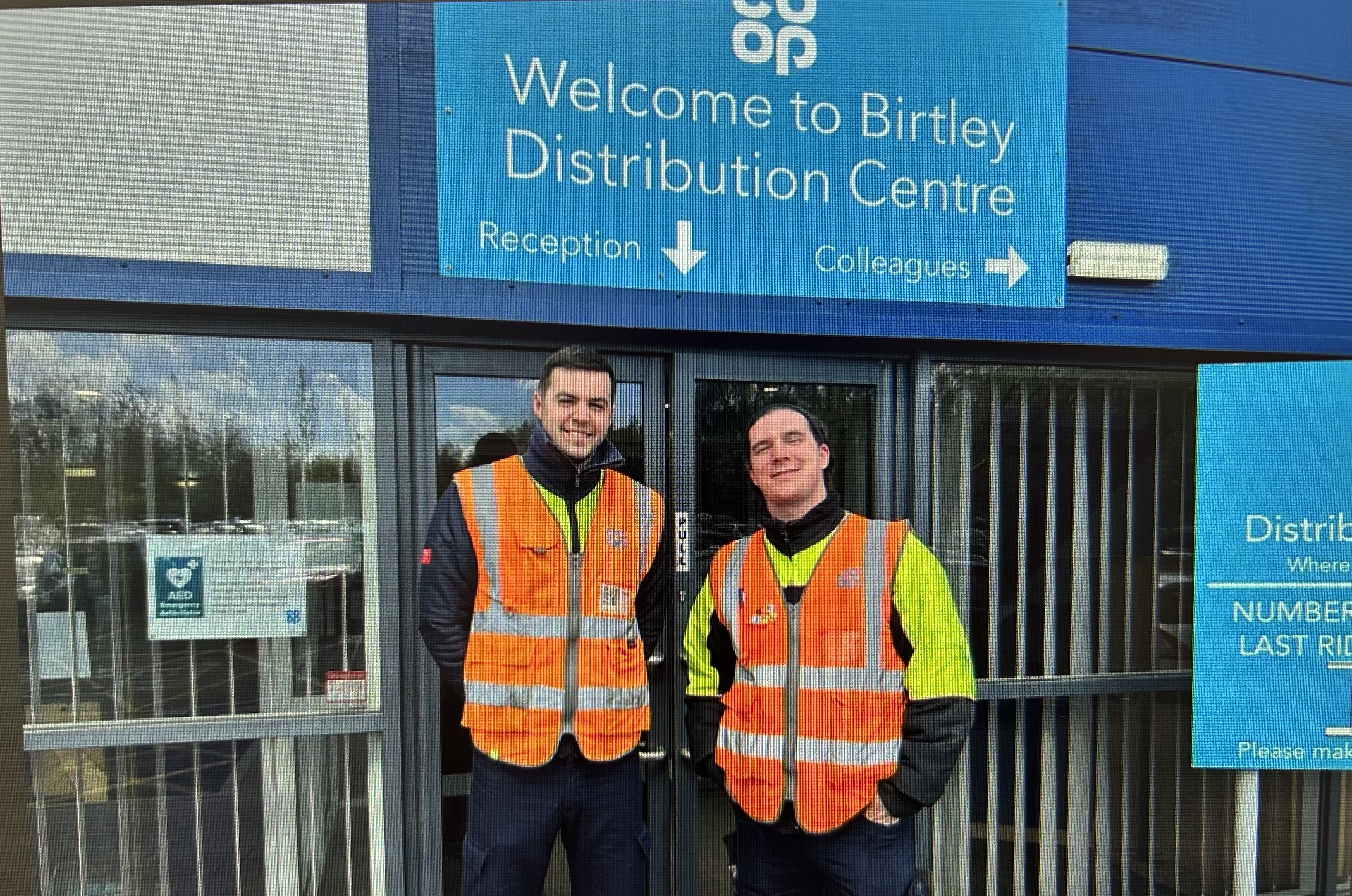
Dale and Lewis, both Warehouse Team Managers at our Birtley depot, share how they joined the Co-op and how they've progressed their career in Logistics -
Working at Co-op I can balance being a Team Leader while I’m at university
Danielle, describes how being a student and a Customer Team Leader at Co-op will help shape her future career. -
Why Visibility Matters: Julie on Being LGBTQ+ in Property
We sat down with Julie Musesoglu, Junior Surveyor Apprentice, to talk about their lifelong love of property, their experiences as an LGBTQ+ person, and what feeling included at work really looks like. -
You’re going to university!
Let Co-op help you on your journey -
Legal Services Referral Scheme
We’re always on the lookout for great people to join our Co-op. And now you can be rewarded for recommending a friend to join our Legal Services team. -
Finance Referral Scheme
We’re always looking for talented people to join us in our Finance team, and now you can be rewarded for helping us find them. -
Progressing my career in Logistics whilst completing my apprenticeship
Vicky, Castlewood Warehouse Team Manager shares how she has developed and completed her apprenticeship in depot -
Wholesale
Explore exciting career opportunities at Co-op and Co-op Wholesale. Join us at our Scunthorpe or Manchester offices, or work field-based to support our independent retailers across the UK. -
From MBA Student to Store Manager: Martina shares her Co-op Journey in London
Follow Martina's journey to becoming a Store Manager in one of London's busy Co-op Food stores and discover how stepping into leadership has transformed her confidence. -
Nadia’s Story of Representation, Opportunity and Growth in London
Learn how Nadia turned a search for better work-life balance into a rewarding career as a Store Manager. From championing colleague voices to helping create a more inclusive workplace, her story shows what's possible when potential is recognised and supported. -
Co-op saw my potential, not my disability
Customer Team Leader, Jade Hughes, talks about her journey, from diagnosis with a rare brain disorder, to finding a workplace where she can develop her skills and pursue her studies. -
Changing Careers at Co-op: Peggy's Journey from Teaching to Retail
From Spanish Teacher to Customer Team Member. Learn more about how the pandemic pushed Penny to explore a career in retail. -
I've been given the opportunity to get involved in all sorts of projects whilst in role at Newhouse
Transport Support Assistant, Jonathan Green, talks about the various opportunities he's had whilst working in depot -
Team Leader Careers at Co-op: Insights from an Operations Manager
Operations Manager, Simon, reveals what it’s like to be a Team Leader in the retail industry, and explains why things are so different at Co-op. -
Avonmouth warehouse opportunities
Learn more about working at our Avonmouth depot -














































































Sign up to job alerts
Don't see what you’re looking for? Sign up and we'll notify you when roles become available.
