Why Visibility Matters:
Julie on Being LGBTQ+ in Property
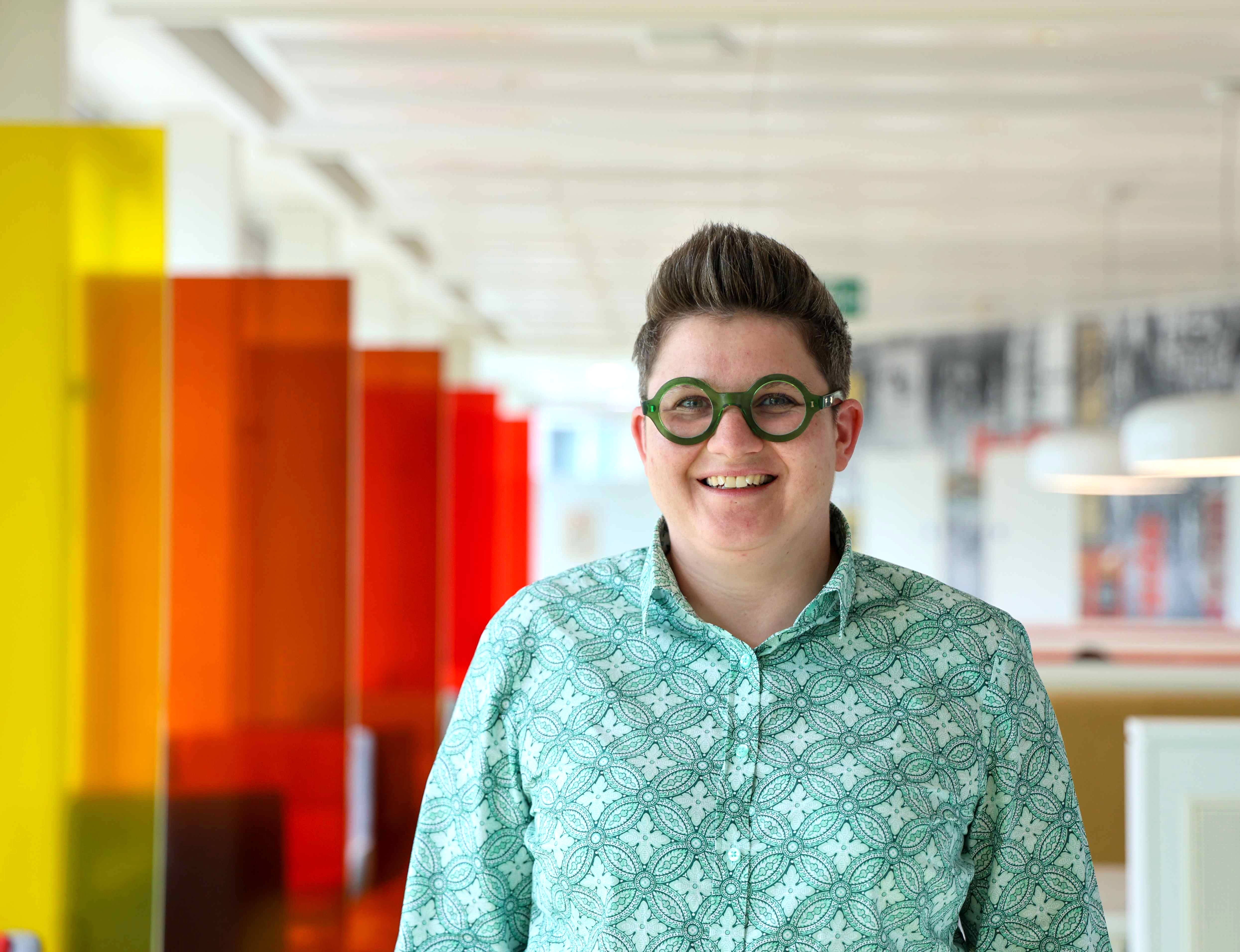
Julie Musesoglu | Junior Surveyor Apprentice“The built environment is responsible for creating the places we all live, work, shop and socialise in, so it’s important that it reflects and understands different communities”.
At Co‑op, we’re proud of the people who make our Property team what it is. Everyone brings their own story, their own perspective and their own journey, and that diversity helps us create places and communities that truly matter. We sat down with Julie Musesoglu, Junior Surveyor Apprentice, to talk about their lifelong love of property, their experiences as an LGBTQ+ person, and what feeling included at work really looks like.
Q: Can you tell me a bit about yourself and your role in Co‑op Property?
“I’m very new to Co‑op. I joined in January this year as an apprentice. My job title is Junior Surveyor and I’m doing a real estate management degree apprenticeship, which is really exciting. As I go through my studies, I’ll rotate within teams in Property so the team I’m working with aligns to what I’m studying. It’s a really great opportunity to get a good understanding of all the different teams and figure out what I like and what I’m good at. Everyone’s been so welcoming.”
Q: What first interested you in getting into property?
“I was obsessed with property when I was a kid. Wednesday was property day in the newspaper and I’d wait for it to come out and read through it all. If you pointed to a house for sale when I was 11, I’d be able to tell you how many bedrooms it had and whether it was good value. Life happened and that went off the radar a bit. I worked in call centres and admin roles and then by chance ended up at Homes England, which got me back into the property world. I loved it. I was really interested in the detail of everything and how everything works. I’ve spent the past 8 years working in diversity and inclusion, which has been really rewarding, but I’ve ended up back in the property world and couldn’t be happier”
Q: How would you describe your journey as an LGBTQ+ person, and what aspects of your identity feel most important to you?
“I came out as gay when I was 16. I grew up in a very religious family and it was a really tough battle for me. Coming out resulted in me having to move out of home. My career plans changed as I had to quit my A-levels and get a full-time job. As I got older, I became more comfortable with myself.
I realised the term non‑binary fit me about four or five years ago. I’ve never felt like my gender fit neatly in one box, but for a long time didn’t know the name of how I felt. The more I learned about non-binary identities, the more it resonated with my experience. I’d say this has had less of an impact on my life than my sexuality, but that may be because I’m much older now and more confident in who I am.
Q: Have you ever encountered assumptions or stereotypes in the property space?
“When I originally got into the property sector, 15 years ago, it was very much dominated by white, middle‑class straight men, and there was always a bit of a feeling of ‘Do I belong here?’ There was a lack of visible role models in the sector, which is definitely changing but there’s still a lot to do. In terms of my personal experience, I always felt accepted, although I’d often come across people making assumptions that I was straight. I remember someone once saying, ‘I bet your boyfriend is really frustrated if you’re better than him at football,’ and I just agreed because I didn’t know what to do. It’s those throwaway comments that can be awkward, and can even impact your working relationships, even when there’s no ill intent.”
Q: What does an inclusive workplace look like to you, and how has Co‑op supported you?
“It’s the small actions that make the biggest difference. Allyship from colleagues, policies designed with equity and inclusion in mind, and the general interactions you have with your manager. Co‑op seems to be a really inclusive employer and I’ve had a really good experience so far; from the recruitment process and onboarding to seeing messages from our CEO when something is going on in the world. My manager is great and very much an ally. Diversity and Inclusion is a key workstream in the Property Plan, so it’s really good to see that ambition at a team level, as well as organisationally.”
Q: Why does visibility of LGBTQ+ people matter in the property sector, and what impact do you hope your story might have?
“You need to be able to see yourself reflected in people to know you’ll belong. The built environment is responsible for creating the places we live, work, shop and socialise in, so it’s important that the sector reflects and understands different communities. It’s great to see different networking groups and organisations really promoting D&I in the property sector now, and raising that visibility of diverse role models. And anyone can make a difference…just by sharing your story, you may enable others to come forward. At Homes England, someone came out at work for the first time in his 50s after hearing me speak. His working life changed so much for the better. You never know what impact you can have on somebody just by being visible.”
Julie’s honesty and openness show just how powerful it can be when people feel able to share who they are. Stories like theirs help others feel seen, supported and confident that they can build a future here too. We’re grateful to Julie for sharing their journey with us, and for helping to build a Property team where everyone can thrive.